


Can Welded Pipe Nipples Be Used in the Chemical Industry?
As a supplier of welded pipe nipples, I am often asked whether our products are suitable for use in the chemical industry. This is a crucial question, considering the harsh and often corrosive environments that chemical processing plants present. In this blog post, I will explore the viability of using welded pipe nipples in the chemical industry, discussing their advantages, limitations, and key considerations.
Advantages of Welded Pipe Nipples in the Chemical Industry
One of the primary advantages of welded pipe nipples is their cost - effectiveness. Compared to seamless pipe nipples, welded pipe nipples can be manufactured at a lower cost. This is because the welding process allows for the use of flat sheets of metal, which are generally less expensive than the solid billets required for seamless pipe production. In large - scale chemical plants where a vast number of pipe nipples are needed, cost savings can be significant.
Welded pipe nipples also offer flexibility in terms of size and length. They can be easily customized to meet specific project requirements. Chemical processes often involve complex piping systems with various diameters and lengths of pipe nipples. Our ability to provide custom - sized welded pipe nipples ensures that we can meet the diverse needs of chemical industry clients.
In addition, modern welding techniques have made welded pipe nipples highly reliable. Advanced welding processes, such as submerged arc welding (SAW) and gas tungsten arc welding (GTAW), produce strong and durable welds. These welds can withstand high pressures and temperatures, which are common in many chemical processes. For example, in the production of fertilizers, where high - pressure reactions occur, welded pipe nipples can maintain their integrity under such demanding conditions.
Limitations of Welded Pipe Nipples in the Chemical Industry
However, welded pipe nipples also have some limitations when it comes to the chemical industry. One of the main concerns is corrosion. Chemical substances can be highly corrosive, and the weld area of a welded pipe nipple may be more susceptible to corrosion compared to the rest of the pipe. This is because the welding process can change the microstructure of the metal in the weld zone, making it less resistant to chemical attack.
Another limitation is the potential for weld defects. Although modern welding techniques are highly advanced, there is still a small risk of weld defects such as porosity, cracks, or incomplete fusion. These defects can compromise the integrity of the pipe nipple, especially in high - pressure or high - temperature chemical processes. In some cases, a small defect in a pipe nipple can lead to a leak, which can be extremely dangerous in a chemical plant.
Key Considerations for Using Welded Pipe Nipples in the Chemical Industry
When considering using welded pipe nipples in the chemical industry, several key factors need to be taken into account.
Material Selection: The choice of material is crucial. For corrosive chemical environments, materials such as stainless steel or alloy steel are often preferred. Stainless steel offers excellent corrosion resistance, making it suitable for handling a wide range of chemicals. Alloy steel can be used in high - temperature and high - pressure applications. At our company, we offer a variety of materials for welded pipe nipples to meet different chemical industry needs.
Weld Quality Control: Strict quality control measures should be in place during the welding process. This includes non - destructive testing (NDT) methods such as ultrasonic testing (UT), radiographic testing (RT), and magnetic particle testing (MT). These tests can detect weld defects before the pipe nipples are installed in the chemical plant. Our company adheres to strict quality control standards, ensuring that all our welded pipe nipples meet or exceed industry requirements.
Coating and Lining: Applying a protective coating or lining to the welded pipe nipples can enhance their corrosion resistance. Epoxy coatings, for example, can provide a barrier between the pipe nipple and the chemical substances. Lining materials such as PTFE (polytetrafluoroethylene) can also be used in highly corrosive environments.
Specific Applications in the Chemical Industry
Welded pipe nipples can be used in various applications within the chemical industry. In the petrochemical sector, they are used in refineries for transferring crude oil, gasoline, and other petroleum products. These products can be corrosive, but with proper material selection and coating, welded pipe nipples can perform effectively.

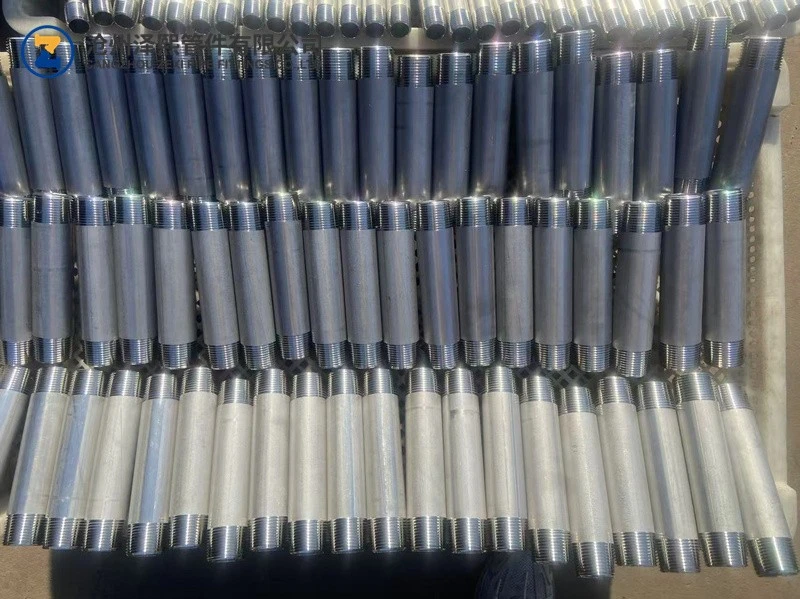
In the pharmaceutical industry, welded pipe nipples are used in the production of drugs. The pipes need to be clean and free from contaminants. Our welded pipe nipples can be manufactured to meet the strict hygiene standards of the pharmaceutical industry.
Comparison with Seamless Pipe Nipples
It is also important to compare welded pipe nipples with Seamless Pipe Nipples. Seamless pipe nipples are generally more resistant to corrosion and have a more uniform microstructure. They are often preferred in applications where the risk of corrosion is extremely high or where the chemical process requires a high - level of purity. However, seamless pipe nipples are more expensive and may not be available in custom sizes as easily as welded pipe nipples.
For example, in the production of high - purity chemicals, seamless pipe nipples may be the better choice. But for less critical applications in the chemical industry, such as transporting non - corrosive chemicals or in low - pressure systems, welded pipe nipples can be a cost - effective alternative.
Our Product Range
As a supplier, we offer a wide range of welded pipe nipples to meet the needs of the chemical industry. Our Carbon Steel Seamless Pipe Nipples are known for their strength and durability. They are suitable for applications where high - pressure and high - temperature resistance are required.
We also provide Galvanized Welded Pipe Nipple. The galvanized coating provides an additional layer of protection against corrosion, making these pipe nipples suitable for use in moderately corrosive chemical environments.
Conclusion
In conclusion, welded pipe nipples can be used in the chemical industry, but careful consideration must be given to their advantages, limitations, and key factors. With proper material selection, strict quality control, and appropriate coating or lining, welded pipe nipples can offer a cost - effective and reliable solution for many chemical industry applications.
If you are in the chemical industry and are looking for high - quality welded pipe nipples, we would be delighted to discuss your requirements. Our team of experts can provide you with technical advice and customized solutions. Contact us to start a procurement discussion and find the best pipe nipple solution for your chemical processes.
References
- ASME Boiler and Pressure Vessel Code
- API Standards for Pipe and Pipe Fittings
- ASTM Standards for Steel Pipes and Fittings


