


Hey there! As a supplier of seamless nipples, I get a ton of questions from customers about how to choose the right size. It's not as straightforward as it might seem at first glance, but don't worry - I'm here to break it down for you.
First off, let's talk about what a seamless nipple is. A seamless nipple is a short piece of pipe that's used to connect two other pipes or fittings. They're made from seamless pipes, which means there are no welds or seams along the length of the pipe. This gives them a smooth interior surface and makes them stronger and more reliable than Welded Pipe Nipple. Seamless nipples come in a variety of materials, including carbon steel, stainless steel, and alloy steel, and they're used in a wide range of industries, from oil and gas to plumbing and construction.
Now, let's get into the nitty - gritty of choosing the right size. The size of a seamless nipple is determined by two main factors: the nominal pipe size (NPS) and the schedule.
Nominal Pipe Size (NPS)
The NPS is a standard way of specifying the size of a pipe. It's not the actual outside diameter (OD) of the pipe, but it's related to it. For example, a 1 - inch NPS pipe doesn't have an OD of exactly 1 inch. The actual OD for a 1 - inch NPS pipe is about 1.315 inches. The NPS is important because it determines the compatibility of the nipple with other pipes and fittings. You need to make sure that the NPS of the nipple matches the NPS of the pipes or fittings you're connecting it to.

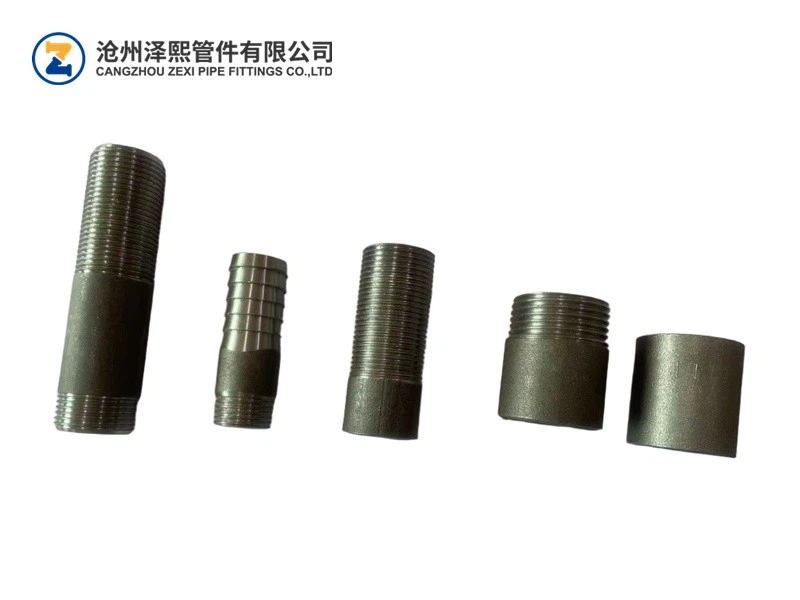
To figure out the right NPS for your application, you need to consider the flow rate of the fluid or gas that will be passing through the pipe. If you're dealing with a high - flow application, you'll need a larger NPS nipple to ensure that there's enough space for the fluid or gas to flow freely. On the other hand, if it's a low - flow application, a smaller NPS nipple might be sufficient.
Schedule
The schedule of a pipe refers to its wall thickness. It's denoted by a number, such as Schedule 40 or Schedule 80. A higher schedule number means a thicker wall. The schedule you choose depends on the pressure and temperature conditions of your application.
For applications with high pressure, you'll need a nipple with a thicker wall, like a Schedule 80. This is because the thicker wall can withstand the higher pressure without bursting. In low - pressure applications, a Schedule 40 nipple might be perfectly fine. It's also important to consider the temperature. If the fluid or gas in the pipe is at a high temperature, a thicker - walled nipple can better handle the thermal stress.
Measuring for the Right Size
If you're replacing an existing nipple, the easiest way to get the right size is to measure the old one. You'll need to measure the NPS and the length of the nipple. To measure the NPS, you can use a caliper to measure the outside diameter of the pipe. Then, you can refer to a pipe size chart to determine the corresponding NPS.
When it comes to the length, measure from end to end of the nipple. Make sure to measure accurately, as even a small difference in length can cause problems with the connection.
Material Considerations
As I mentioned earlier, seamless nipples come in different materials. Carbon Steel Seamless Pipe Nipples are very common because they're strong, durable, and relatively inexpensive. They're suitable for a wide range of applications, including water, gas, and oil.
Stainless steel nipples are more corrosion - resistant than carbon steel. They're a great choice for applications where the pipe will be exposed to harsh chemicals or corrosive environments, such as in the chemical or food processing industries.
Alloy steel nipples offer a combination of strength and corrosion resistance. They're often used in high - temperature and high - pressure applications, like in power plants or refineries.
Thread Type
Another important factor to consider is the thread type. Seamless nipples can have different types of threads, such as NPT (National Pipe Tapered), BSP (British Standard Pipe), or metric threads. You need to make sure that the thread type of the nipple matches the thread type of the pipes or fittings you're connecting it to. An incorrect thread type can lead to leaks and other problems.
Compatibility with Other Fittings
When choosing a seamless nipple, you also need to think about its compatibility with other fittings in your system. For example, if you're using a flange fitting, you need to make sure that the nipple can be properly connected to the flange. Some nipples are designed to be welded to flanges, while others have threaded ends that can be screwed into the flange.
Industry Standards
It's crucial to choose a seamless nipple that meets the relevant industry standards. Standards ensure that the nipple is of high quality and will perform as expected. For example, in the United States, many seamless nipples are manufactured to meet ASTM (American Society for Testing and Materials) standards. These standards specify the chemical composition, mechanical properties, and dimensional tolerances of the pipes.
Our Product Range
As a supplier, we offer a wide range of Seamless Pipe Nipples in different sizes, materials, and schedules. Whether you need a small - diameter nipple for a plumbing project or a large - diameter one for an industrial application, we've got you covered. Our products are made to the highest quality standards, so you can be confident in their performance.
Conclusion
Choosing the right size of a seamless nipple is a multi - step process that involves considering the NPS, schedule, material, thread type, and compatibility with other fittings. By taking the time to understand these factors and measure accurately, you can ensure that you get the right nipple for your application.
If you're still unsure about which size of seamless nipple is right for you, don't hesitate to reach out. We're here to help you make the best choice for your project. Whether you're a professional in the industry or a DIY enthusiast, we can provide you with the guidance and products you need. Contact us today to start the procurement process and let's work together to find the perfect seamless nipple for your needs.
References
- "Pipe Fittings Handbook" by George A. Antaki
- ASTM standards for seamless pipes and fittings
- Various industry publications on piping systems


