


What is the acoustic performance of a threaded coupling?
As a supplier of threaded couplings, I've had numerous inquiries regarding the acoustic performance of these essential components. Threaded couplings are ubiquitous in various industries, from plumbing and HVAC to industrial machinery and automotive applications. Understanding their acoustic performance is crucial for ensuring optimal functionality and minimizing noise pollution in different settings.
Acoustic Basics and Threaded Couplings
To comprehend the acoustic performance of threaded couplings, it's essential to first grasp some fundamental acoustic concepts. Sound is a mechanical wave that travels through a medium, such as air or water. When a threaded coupling is in use, it can generate or transmit sound waves due to several factors, including fluid flow, vibration, and mechanical contact.
Fluid flow through a threaded coupling can create turbulence, which in turn produces noise. This is particularly evident in systems where high - velocity fluids are involved, such as in industrial piping networks. The shape and internal structure of the coupling can influence the degree of turbulence and, consequently, the noise level. For example, a coupling with a smooth internal bore is likely to generate less noise compared to one with rough or irregular surfaces.
Vibration is another significant factor affecting the acoustic performance of threaded couplings. When a coupling is subjected to mechanical forces, it can vibrate, and these vibrations can be transmitted through the connected pipes or structures, producing audible noise. The source of these vibrations can be external, such as from nearby machinery, or internal, due to the flow of fluid within the coupling.
Mechanical contact between the threads of the coupling and the mating parts can also generate noise. Imperfections in the thread profile, such as burrs or uneven wear, can cause rattling or clicking sounds during operation. Additionally, if the coupling is not properly tightened, it can lead to loose connections, which may result in increased vibration and noise.
Factors Affecting Acoustic Performance
- Material Selection
The material of the threaded coupling plays a vital role in its acoustic performance. Different materials have different acoustic properties, such as density and elasticity, which can affect how sound waves are transmitted and absorbed. For instance, metal couplings, like steel or brass, are generally good conductors of sound. They can easily transmit vibrations and generate noise. On the other hand, plastic couplings, such as PVC or nylon, tend to have better sound - absorbing properties. They can dampen vibrations and reduce the overall noise level. - Design and Geometry
The design and geometry of the threaded coupling can significantly impact its acoustic performance. Couplings with a larger diameter or a more complex shape may create more turbulence and generate more noise during fluid flow. Additionally, the pitch and profile of the threads can affect the mechanical contact between the coupling and the mating parts. A fine - pitched thread may provide a more secure connection but can also be more sensitive to vibration and noise. - Installation and Tightening
Proper installation and tightening of the threaded coupling are crucial for minimizing noise. If the coupling is not tightened correctly, it can lead to loose connections, which can cause rattling and vibration. Over - tightening, on the other hand, can damage the threads and also increase the risk of noise generation. It is essential to follow the manufacturer's recommendations for installation torque to ensure a proper and quiet connection.
Measuring Acoustic Performance
To evaluate the acoustic performance of threaded couplings, several measurement techniques can be employed. One common method is to use a sound level meter to measure the sound pressure level (SPL) generated by the coupling during operation. This can provide a quantitative measure of the noise level.
Another approach is to use vibration sensors to measure the vibration levels of the coupling and the connected pipes. By analyzing the vibration frequency and amplitude, it is possible to identify the sources of noise and take appropriate measures to reduce it.
In some cases, acoustic imaging techniques can be used to visualize the sound field around the threaded coupling. This can help in identifying areas of high noise generation and understanding the propagation of sound waves.
Applications and Acoustic Considerations
- Plumbing Systems
In plumbing systems, threaded couplings are used to connect pipes and fittings. Noise generated by these couplings can be a nuisance in residential and commercial buildings. For example, in a bathroom or kitchen, the sound of water flowing through the pipes and couplings can be heard, especially at night. To minimize this noise, it is advisable to use couplings made of sound - absorbing materials, such as plastic, and to ensure proper installation. - HVAC Systems
Heating, ventilation, and air - conditioning (HVAC) systems rely on threaded couplings to connect ductwork, pipes, and other components. Noise generated by these couplings can affect the comfort of building occupants. For instance, in an office building, the noise from the HVAC system can be distracting and reduce productivity. To improve the acoustic performance of HVAC systems, it is important to select couplings with low - noise characteristics and to isolate them from the building structure to prevent vibration transmission. - Industrial Machinery
In industrial settings, threaded couplings are used in a wide range of machinery, from pumps and compressors to conveyors and generators. The noise generated by these couplings can contribute to the overall noise pollution in the workplace, which can be harmful to workers' health. To address this issue, industrial facilities often implement noise - reduction measures, such as using vibration - isolating mounts and selecting couplings with improved acoustic performance.
Our Offerings and Solutions
As a supplier of threaded couplings, we offer a wide range of products to meet the diverse needs of our customers. Our NPT Female Coupler is designed with precision to ensure a tight and secure connection, minimizing the risk of noise due to loose fittings. The smooth internal bore of these couplings helps to reduce turbulence and noise during fluid flow.
Our Socket Weld Pipe Fittings are made from high - quality materials, which are carefully selected to provide good acoustic performance. These fittings are suitable for applications where noise reduction is a priority, such as in residential and commercial buildings.
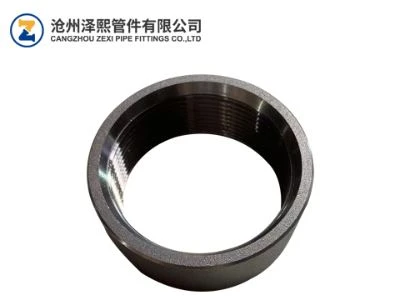

For those looking for a specific size, our 3 4 Inch Threaded Coupling is a popular choice. It is engineered to meet the highest standards of quality and performance, ensuring minimal noise generation during operation.
Conclusion
The acoustic performance of threaded couplings is a complex topic that depends on various factors, including material selection, design, installation, and application. By understanding these factors and taking appropriate measures, it is possible to minimize the noise generated by threaded couplings and improve the overall functionality and comfort of different systems.
If you are in the market for threaded couplings and are concerned about acoustic performance, we invite you to contact us. Our team of experts is ready to assist you in selecting the right products for your specific needs. We can provide detailed information about the acoustic properties of our couplings and offer solutions to help you achieve the best possible results.
References
- Beranek, Leo L. "Acoustics." American Institute of Physics, 1986.
- Harris, Cyril M. "Handbook of Noise Control." McGraw - Hill, 2007.
- Mechefske, Chris K. "Vibration - Based Condition Monitoring: Industrial, Aerospace, and Automotive Applications." Wiley, 2017.


