


Hey there! As a supplier of seamless nipples, I often get asked about what materials these little but crucial components are made of. So, I thought I'd write this blog to share all the deets on the materials used in seamless nipples.
Carbon Steel
One of the most common materials for seamless nipples is carbon steel. Carbon steel seamless nipples are super popular, and you can check out more about them Carbon Steel Seamless Pipe Nipples. Carbon steel is an alloy that contains carbon as the main alloying element, usually with a small amount of other elements like manganese, silicon, and sulfur.
The reason carbon steel is so widely used is its strength and durability. It can withstand high pressure and temperature, making it suitable for a variety of industrial applications. Whether it's in the oil and gas industry, chemical plants, or even in some plumbing systems, carbon steel seamless nipples can do the job. They're also relatively inexpensive compared to some other materials, which makes them a cost - effective choice for many projects.
However, carbon steel does have a bit of a downside. It's prone to rust and corrosion, especially in environments with high humidity or exposure to certain chemicals. But don't worry, there are ways to protect it, like applying a coating or using it in combination with corrosion - resistant materials.
Stainless Steel
Stainless steel is another top - notch material for seamless nipples. Stainless steel contains chromium, which forms a passive oxide layer on the surface of the metal. This layer protects the steel from rust and corrosion, even in harsh environments.
Stainless steel seamless nipples are great for applications where hygiene is important, such as in the food and beverage industry, pharmaceutical manufacturing, and water treatment plants. They're also resistant to high temperatures and can handle a wide range of chemicals.
There are different grades of stainless steel, like 304 and 316. Grade 304 is the most commonly used grade. It's a general - purpose stainless steel that offers good corrosion resistance and is relatively affordable. Grade 316, on the other hand, contains molybdenum, which gives it even better corrosion resistance, especially in chloride - rich environments like coastal areas or swimming pools.
Alloy Steel
Alloy steel seamless nipples are made by adding other elements like nickel, chromium, vanadium, and molybdenum to carbon steel. These additional elements enhance the properties of the steel, such as its strength, hardness, and heat resistance.
Alloy steel is often used in high - stress applications, like in the aerospace industry, power generation plants, and heavy machinery. For example, in a power plant, alloy steel seamless nipples can be used to connect pipes that carry high - temperature steam or hot water. The enhanced properties of alloy steel ensure that the nipples can handle the extreme conditions without failing.
However, alloy steel is more expensive than carbon steel, and its manufacturing process is more complex. So, it's usually reserved for applications where its special properties are really needed.
Copper
Copper seamless nipples have been around for a long time. Copper is a great conductor of heat and electricity, and it also has natural antibacterial properties.
In plumbing systems, copper seamless nipples are widely used because they're easy to install and have good corrosion resistance in most water conditions. They can also be bent and shaped easily, which makes them suitable for different pipe configurations.
But copper does have some limitations. It can react with certain chemicals in the water, like acids or alkalis, which can lead to corrosion over time. And compared to steel, copper is more expensive, especially when the price of copper in the market is high.
Comparison with Welded Nipples
It's also worth comparing seamless nipples with Welded Pipe Nipples. Welded nipples are made by welding a piece of pipe to form a nipple. The welding process can introduce some weaknesses at the weld joint, such as potential cracks or uneven thickness.
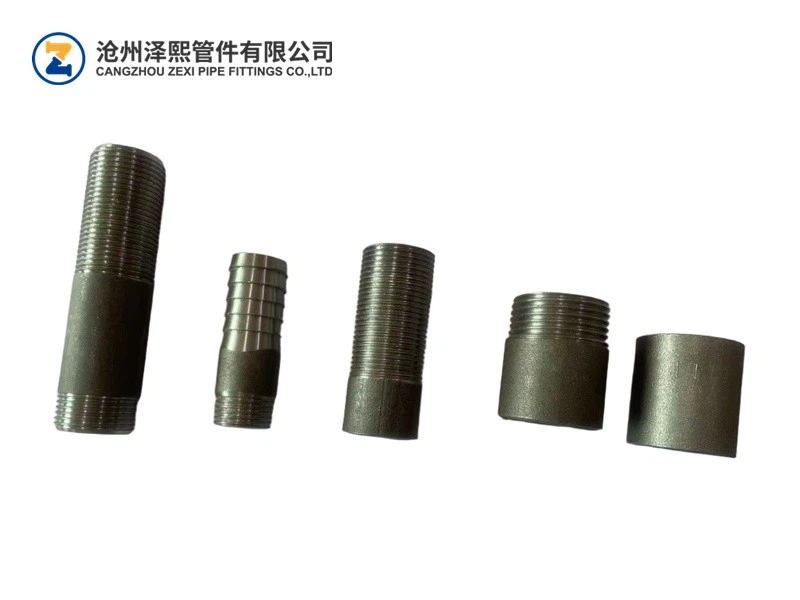

Seamless nipples, on the other hand, are made from a solid piece of metal, which means they have a more uniform structure and are generally stronger and more reliable. They're less likely to fail under pressure, especially in high - stress applications. However, the manufacturing process of seamless nipples is more complex and expensive, which is why welded nipples are still used in some less - demanding applications.
The Welding Process in Nipples
If you're interested in the welding aspect of nipples, you can learn more about Nipple Welding. When it comes to welded nipples, the quality of the weld is crucial. A good weld should be strong, free of defects, and have a uniform thickness.
There are different welding methods, like arc welding, gas welding, and resistance welding. Each method has its own advantages and disadvantages, and the choice of method depends on the material of the nipple, the application, and the available equipment.
Why Choose Our Seamless Nipples
As a supplier of seamless nipples, we take pride in offering high - quality products made from the best materials. We source our materials from reliable suppliers and use strict quality control measures during the manufacturing process.
Whether you need carbon steel, stainless steel, alloy steel, or copper seamless nipples, we've got you covered. Our products are suitable for a wide range of applications, from small - scale plumbing projects to large - scale industrial installations.
If you're in the market for seamless nipples, I encourage you to get in touch with us. We can provide you with detailed product information, competitive prices, and excellent customer service. Whether you have a specific project in mind or just want to learn more about our products, don't hesitate to reach out. We're here to help you find the perfect seamless nipples for your needs.
References
- "Metals and Alloys in Engineering," John Wiley & Sons
- "Handbook of Stainless Steels," ASM International
- "Copper in Building Construction," Copper Development Association


